 11
11
TL;DR: Padel is doubles, played on a 10m × 20m enclosed court. Scoring is identical to tennis — 15, 30, 40, game; six games with a two-game margin wins the set; tiebreak to 7 at 6–6. The serve is underarm, bounced first, struck at or below waist height, from behind the service line, diagonally. After the ball bounces in your court it may be played off your own walls. A shot that hits your opponents’ wall before their floor loses the point.
Everything below — the padel tennis rules in plain English — follows the International Padel Federation (FIP) Rules of Padel, effective 1 January 2026. Club house rules vary in small ways — mainly around the golden point — and where they commonly do, it is noted.
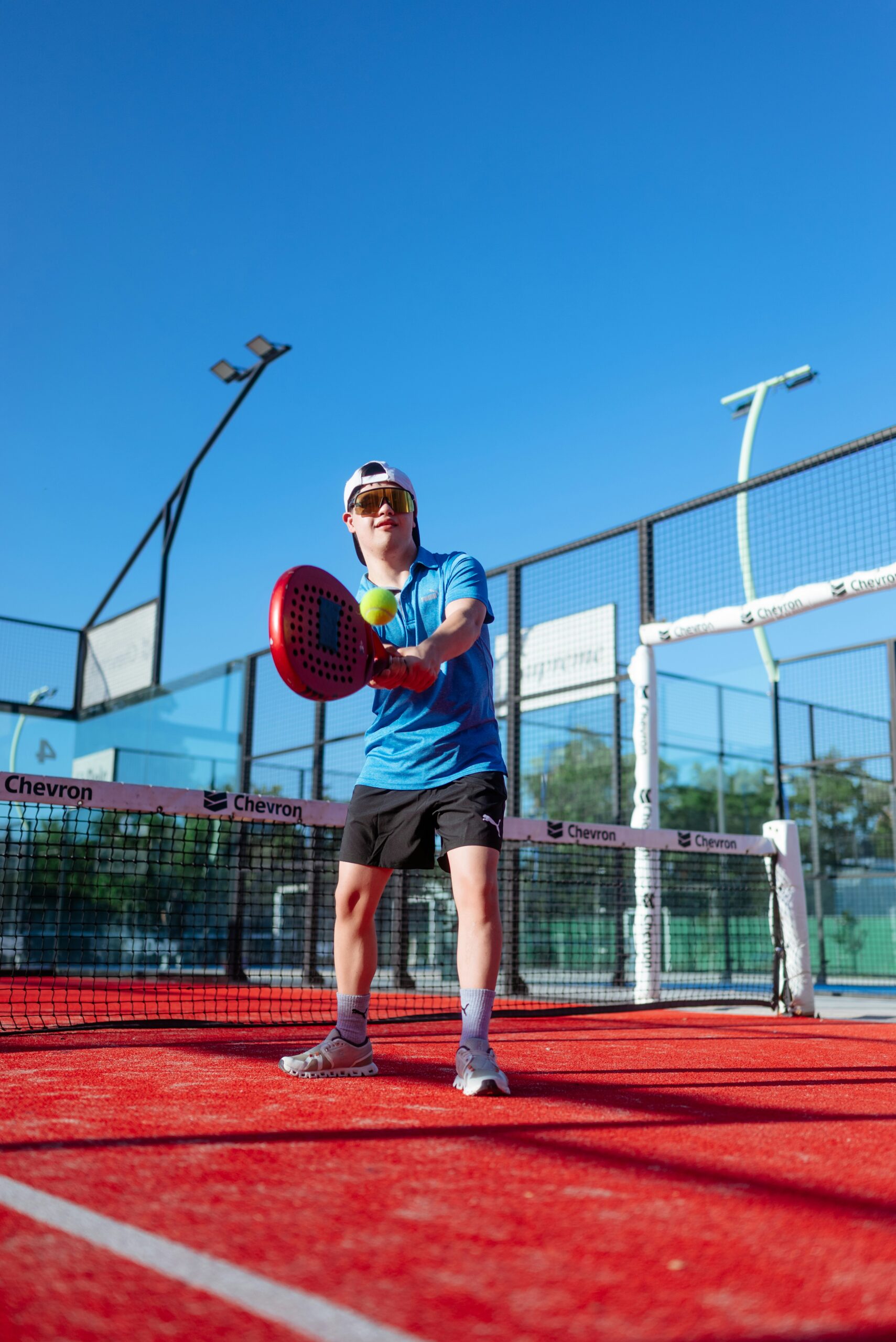
A padel court is a rectangle 10 metres wide by 20 metres long (interior measurements, 0.5% tolerance). It is divided by a net, with service lines 6.95m from the net on each side and a centre line splitting each service area in two.
Minimum ceiling height is 6 metres; 8 metres is recommended for new builds. Walls are a mix of glass and metal mesh, and — this is the part that makes padel padel — they are in play.
Padel uses tennis scoring. If you know tennis, you know this section.
| Points won | Called |
|---|---|
| 0 | Love |
| 1 | 15 |
| 2 | 30 |
| 3 | 40 |
| 4 | Game |
At 40–40 it is deuce. The FIP rulebook allows three scoring options:
Golden point is the norm in UK club and social play, because it keeps sessions to time. Check before you start.
Sets: first pair to six games, with a two-game margin. At 6–6, a tiebreak.
Tiebreak: first to seven points with a two-point margin. Players change ends after every six points.
The serve is where padel differs most from tennis, and where beginners lose the most points to rule errors.
How to serve legally:
You get two attempts, as in tennis.
It is a fault if:
It is a let — replay the serve — if:
Note the difference from tennis: a padel serve that clips the net and lands in is a let and gets replayed, not a fault.
This is the rule people get wrong, so it is worth stating both directions.
Your own walls — allowed. After the ball bounces on your side of the court, it may hit your back wall or side walls and remain in play. You return it before it bounces a second time. This is normal, constant padel and it is why the sport rewards patience over power.
Opponents’ walls — not allowed directly. Your shot must bounce on the floor of your opponents’ court before it touches any of their walls. A shot that flies over the net and hits their glass first is out, and you lose the point.
The FIP wording (Rule 14) confirms a return is correct when the ball “bounces directly into the opposing court or hits the wall in the players own court first and it then bounces into the opponent’s court.”
You lose the point if:
At many venues, if the ball leaves the court through an opening, you may run outside the court and return it, as long as it has not bounced twice and your return comes back into play over the net.
This is not available everywhere — it depends on whether the venue has exit gates and whether the surrounding area is safe. UK indoor courts are frequently fully enclosed, in which case the rule does not apply. Ask before you play.
| Situation | Ruling |
|---|---|
| Serve clips net, lands in box | Let — replay |
| Serve struck above waist | Fault |
| Ball bounces your side, hits your back glass, you return it | Legal, in play |
| Your shot hits their glass before their floor | You lose the point |
| Ball bounces twice your side | You lose the point |
| Ball hits you or your partner | You lose the point |
| You touch the net during a rally | You lose the point |
| Score reaches 40–40 | Deuce — advantage or golden point, per house rules |
| Set reaches 6–6 | Tiebreak to 7, two clear points |
Golden point vs advantage. The most common variation in UK clubs. Confirm before the first game.
Out-of-court play. Only where the venue physically allows it.
Serving order. Fixed for the set once established; partners alternate serving games and receiving sides.
“Paddle” vs “padel”. The same sport is often searched as paddle tennis, but padel and platform/paddle tennis are different sports with different courts and rules. This guide covers padel.
What are the basic rules of padel?
Padel is doubles on a 10m × 20m enclosed court. Serve underarm below waist height after bouncing the ball, diagonally into the opponent’s box. Scoring matches tennis. The ball may be played off your own walls after it bounces, but a shot must land on the opponents’ floor before touching their walls.
Is padel scoring the same as tennis?
Yes — 15, 30, 40, game, with sets to six games and a tiebreak at 6–6. The main variation is the golden point at deuce, which is standard in most UK club play.
Can the ball hit the wall in padel?
Yes, after it bounces on the floor. A ball that bounces on your side and rebounds off your back glass is still live. A shot that reaches the opponents’ wall without first bouncing on their floor is out.
Why is the padel serve underarm?
The FIP rules require the ball to be bounced and struck at or below waist height. This limits serve speed and keeps rallies long, which is a deliberate design choice.
What happens at 40–40 in padel?
Depending on the format, either advantage scoring or a golden point — a single decisive point where the receiving pair chooses which side receives it. Golden point is standard in UK club play.
Can you go outside the court in padel?
At venues with exit gates, yes — you may play a ball back from outside the court if it has not bounced twice. Fully enclosed indoor courts do not allow this.
Is padel the same as paddle tennis?
No. They are separate sports with different court sizes, rules and equipment, though the names are frequently confused in search.
What is the Star Point in padel?
A deuce format introduced by the FIP for 2026. The first two deuces are played with advantage; if the game reaches deuce a third time, one deciding point wins it. It is used on Premier Padel and the CUPRA FIP Tour; club matches usually stick to golden point or advantage.
How many players play padel?
Four. Padel is played as doubles on a 10m × 20m court. A singles format on a narrower 6m × 20m court also exists.
Is padel the same as pickleball?
No. Pickleball is played with a solid paddle and a perforated plastic ball on an open court with no walls. In padel the glass walls are part of play. Padel vs pickleball compared.
Know the rules but still losing points? See 7 padel mistakes that keep beginners stuck, or start from your first padel session.