 11
11
TL;DR: Padel and pickleball are both enclosed-court, doubles-friendly racket sports enjoying rapid growth — but they are not interchangeable, and the UK tells a different story than the US. In America, pickleball leads with 24.3 million players (SFIA, 2025). In Britain, padel dominates: the LTA counted 1,000,000 padel players by May 2026, against roughly 55,000 active pickleball players estimated by Pickleball England for 2025 — and Sport England’s own Active Lives survey put pickleball at just 27,300 people playing at least once in the year to November 2023, versus 51,000 for padel in the same survey (padel’s own Active Lives numbers have grown further since — see below). The games themselves differ more than their names suggest: padel is played on a 20m × 10m court with glass walls the ball can rebound off, using solid rackets and a low-pressure tennis ball; pickleball is played on a much smaller 13.41m × 6.09m open court, with thin paddles, a perforated plastic ball, and a “kitchen” no-volley zone near the net that padel has no equivalent of.
If you have typed “padel vs pickleball” into Google, you are almost certainly one of two people: someone who has heard both names thrown around and genuinely doesn’t know which is which, or someone deciding which one to actually try. Both are fair questions, and most of what comes up in search results answers neither one properly — a lot of it borrows US pickleball statistics to describe a UK market where the picture is nearly the opposite.
This piece sorts out what each sport actually is, where the real numbers come from, and which one is more likely to have a court near you. New to padel specifically? Start with our beginner’s guide and padel rules explained before diving into the comparison below.
Padel is squash-meets-tennis in a glass box; pickleball is table tennis stretched out onto a badminton-sized court. Padel keeps the ball alive off walls in long, tactical rallies. Pickleball keeps rallies short and technical around a net-side zone nobody is allowed to smash from. They share an “easy to pick up, hard to master” reputation and very little else in actual gameplay.
The two sports get lumped together mostly because both showed up in gyms and leisure centres around the same time, both are usually played in doubles, and both have “paddle” somewhere in their vocabulary. Once you’re standing on a court, the resemblance mostly ends.
| Padel | Pickleball | |
|---|---|---|
| Court size | 20m × 10m | 13.41m × 6.09m |
| Enclosure | Glass and mesh walls — ball stays live off them | Open court, no walls |
| Racket | Solid, perforated, carbon fibre or fibreglass, no strings | Solid paddle, thin plastic or composite face |
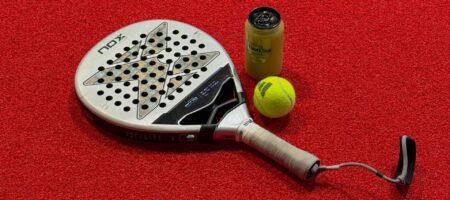
| Ball | Low-pressure tennis ball | Lightweight perforated plastic ball |
| Net height | 88cm at the posts, 88cm at centre (net is level) | 91cm at the sidelines, 86cm at the centre |
| Format | Almost always doubles | Singles or doubles |
| Serve | Underarm, bounced first, below waist height | Underarm, diagonal, must clear the kitchen line |
| Signature rule | Ball may be played off your own back and side walls | “Kitchen” — a 2.13m no-volley zone either side of the net |
| Scoring | Tennis scoring: 15/30/40/game, sets to six | Rally or side-out scoring to 11, win by two |
Source for the UK-specific comparison: the Lawn Tennis Association’s own padel vs pickleball explainer, which governs both sports’ development pathway in Britain through LTA Padel. Full rule detail for padel comes from the FIP Rules of Padel, effective 1 January 2026 — the sport’s official global rulebook.
The single hardest thing for a tennis player to unlearn in padel, and the single most confusing thing for a spectator, is that the glass is part of the game. After the ball bounces on your side of the court, it can hit your back or side wall and remain live — you simply wait for it to come back to you. Rushed shots are usually wrong shots in padel; patience off the glass is the actual skill.
That single mechanic reshapes everything else about the sport: rallies run longer, power matters less than placement, and a good padel player looks less like someone hitting hard and more like someone controlling where the ball goes after it bounces twice.
Pickleball has no walls at all, but it has its own signature restriction: a 2.13-metre zone either side of the net — universally nicknamed “the kitchen” — where you cannot volley the ball out of the air. You can step into it to play a ball that has bounced, but not to smash one before it lands. That single rule is why pickleball rallies tend to be shorter and more technical near the net rather than a wall-assisted chess match like padel.
Neither sport asks for the fitness of singles tennis or squash, which is a large part of why both have grown fast among adults returning to sport in their 30s, 40s and beyond. The court sizes explain most of the difference in physical demand: padel’s 20m × 10m enclosed court involves more lateral movement and covers more ground per rally, particularly once the ball starts coming off the glass from unpredictable angles. Pickleball’s smaller court and no-volley zone produce shorter points with quicker hands but less overall running.
If you have any history of elbow or shoulder trouble, it is worth knowing that padel injury research specifically flags the elbow as the sport’s most commonly injured joint — see our padel injuries guide for the published data and what actually helps prevent it. Comparable published injury-rate research specific to pickleball is thinner in the literature at the time of writing; treat claims that either sport is definitively “safer” with caution until better data exists.
Here is where most “padel vs pickleball” content gets the UK picture backwards, because it leans on American growth statistics that don’t apply here.
In the United States, pickleball is the story: the Sports & Fitness Industry Association’s 2025 report counted 24.3 million Americans playing pickleball, up 171.8% since 2022 and 479% since 2020 — making it the fastest-growing sport in the country (SFIA, U.S. Pickleball Participation report).
In Britain, the roles are reversed. The LTA — which oversees both sports’ development in the UK — reported 1,000,000 padel players in Britain by May 2026, up from roughly 15,000 in 2019, playing across 1,825 courts at 551 venues (LTA, “1,000,000 padel players in Britain,” May 2026; an earlier update put the figure at 860,000 in March 2026).
Pickleball is growing in the UK too, but from a far smaller base and by a different measure. Sport England’s Active Lives survey — the government’s own participation research, running November 2022 to November 2023 — recorded 27,300 adults who had played pickleball at least once in the year, with 20,000 playing at least twice a month. The same survey put padel at 51,000 occasional players and 23,000 regular players over that period — already roughly double pickleball’s reach, well before the LTA’s more recent, much larger padel figures. Pickleball England, the sport’s own governing body, separately estimates active pickleball participation had grown to around 55,000 players by 2025.
Padel’s own Active Lives numbers have kept climbing since that cycle, though the picture gets less tidy the more recent you go. Secondary coverage of the following Active Lives cycle (November 2023–24) puts padel’s twice-monthly participation at roughly 51,000 — more than double the 23,000 figure from the year before (Racket Business, May 2026). A separate figure circulating for the year to November 2024 puts padel participation at 111,700 (Oxygen Consulting). The two figures likely reflect different participation-frequency definitions within Active Lives (e.g. “played twice a month” vs “played at least once in the year”), which would explain why one source reports roughly 51,000 padel players and the other over 111,000 for a similar period — neither figure comes from a Sport England page we could link to directly, so treat both as directional. No equivalent newer cycle figure for pickleball specifically has surfaced yet.
Two different measurement methods, several different time windows — so treat these as directional rather than perfectly comparable. But the direction is consistent across every source: padel has a multi-year, order-of-magnitude head start on pickleball in Britain, which is the opposite of the American picture. Practically, that means padel courts and clubs are currently far easier to find across the UK than pickleball ones — a genuinely useful fact if you’re deciding which one to actually try first.
Padel pricing in the UK is well documented: the LTA’s own participation report puts an average off-peak court booking at £27 per hour, which works out to roughly £7 per person in a typical four-player doubles booking (LTA, March 2026 report, cited above). Padel-specific racket hire typically runs £3–£5 at UK venues, often free at newer clubs.
UK-wide pricing data specifically for pickleball court hire is not yet as centrally published — venues vary between leisure centres (which frequently offer pickleball as a low-cost add-on to existing badminton or tennis courts) and dedicated clubs. As a rule of thumb, pickleball is usually the cheaper sport to try for the first time, since it often piggybacks on existing badminton courts rather than requiring purpose-built enclosed courts.
Try padel first if: you’ve played tennis or squash before and want something in that family; you like longer, tactical rallies; you want the sport with by far the better chance of a court near you in the UK right now; you enjoy the social, four-a-side format that dominates UK club culture.
Try pickleball first if: you want the lower physical demand and smaller court; you prefer quick-hands net play over longer rallies; you want a sport that’s often available on courts you already have access to (many UK leisure centres are adding pickleball lines to existing badminton courts); you’re drawn to its explosive growth story, even if that growth is currently more visible in the US than in Britain.
Try both if: you’re simply curious. They share almost nothing beyond “paddle sport played in doubles,” so trying one tells you very little about whether you’ll like the other — several UK clubs now run taster sessions for both on the same afternoon.
Padel, by a wide margin. The LTA recorded 1,000,000 padel players in Britain by May 2026, while Pickleball England’s own estimate puts active pickleball participation at around 55,000 in 2025 — roughly eighteen times fewer. This is the reverse of the picture in the United States, where pickleball is the larger and faster-growing sport.
Padel allows the ball to be played off your own back and side walls after it bounces, turning the court’s glass into part of the game. Pickleball has no walls but restricts volleys near the net through the “kitchen,” a no-volley zone either side of the net line.
Both are commonly described as easy to pick up and hard to master. Padel’s learning curve is mostly about trusting the back wall instead of chasing every ball; pickleball’s is mostly about controlling shots near the net without violating the kitchen rule.
No. Padel rackets are larger, heavier, and designed to control a tennis-pressure ball; pickleball paddles are lighter and built for a perforated plastic ball. The two are not interchangeable equipment.
Padel’s larger court generally demands more lateral running per rally; pickleball’s smaller court and shorter points demand quicker reactions with less overall distance covered. Neither matches the cardiovascular intensity of singles tennis or squash. See our guide on padel’s health benefits for the specific data on padel.
Padel courts are considerably more widespread in the UK at present — 1,825 courts across 551 venues as of May 2026, per the LTA. Pickleball is most commonly found added to existing badminton or tennis courts at leisure centres; check with Pickleball England or your local leisure centre for current availability in your area.