 11
11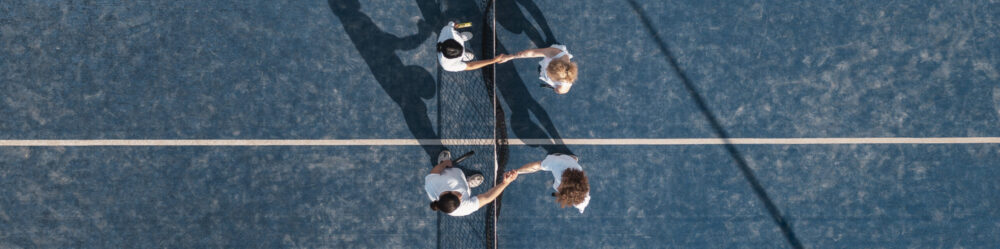
⸻
Let me be upfront about something. I am not a gym person. I have joined three gyms in my adult life, gone faithfully for about three weeks each time, and then quietly stopped going while continuing to pay the membership fee for four months out of guilt. Running bores me after the first mile. Fitness classes make me feel like I’m being yelled at in a language I don’t speak.
So when someone first described padel to me as “basically exercise that doesn’t feel like exercise,” I was skeptical in the way that only someone who has failed at exercise many times can be skeptical. I had heard that pitch before. It usually ended with me standing on a yoga mat wondering how long until it was socially acceptable to leave.
Padel was different. And I want to tell you exactly why, because I think a lot of people who are in the same situation I was — not unfit exactly, but not active, vaguely wanting to change that, dreading the process — are going to find this sport genuinely life-changing if they give it a real shot.
Most sports have a humiliation phase. You show up, you’re terrible, you spend the first several sessions just trying to make basic contact, and you leave feeling worse about yourself than when you arrived. That phase is a big reason why people quit.
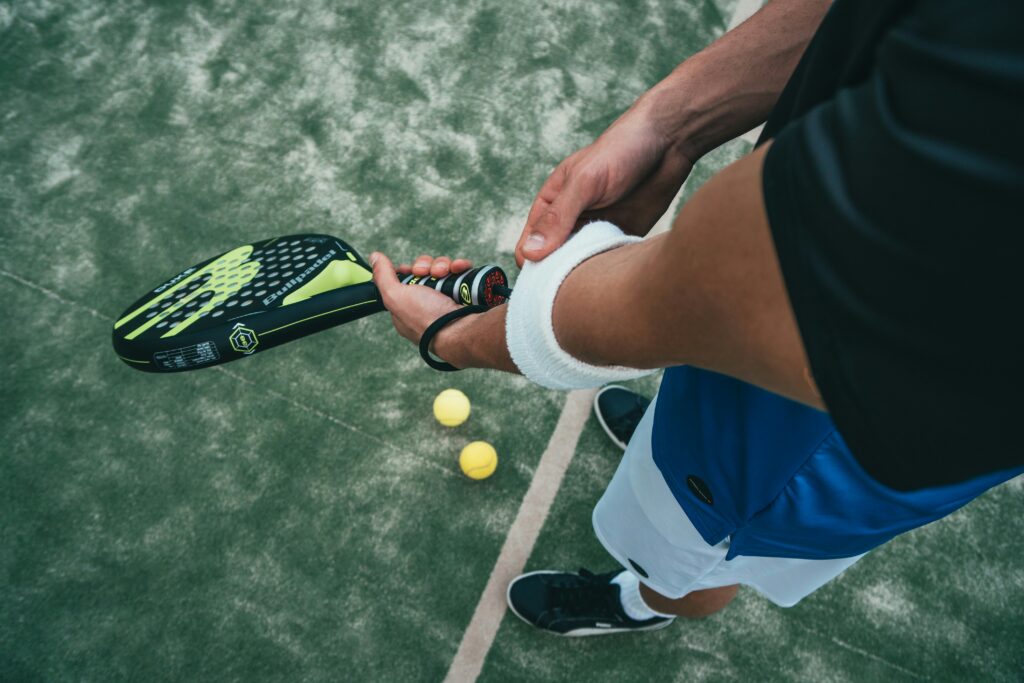
Padel almost doesn’t have this. The serves are underhand, the court is smaller than tennis, and the enclosed walls mean the ball stays in play longer than you’d expect. The rallies are real from the very beginning. Within your first session — not your tenth, your first — you’ll be having actual exchanges with your partner, reacting to real shots, and experiencing the strange satisfaction of a ball coming off the back glass and finding your racket in exactly the right place.
That feeling matters more than it sounds. When exercise is immediately enjoyable, you come back. When it’s immediately punishing, most people don’t.If you want to understand exactly what to expect before you walk onto a court for the first time, we wrote a full breakdown of the rules, the format, and what the first session actually feels like — Padel for Absolute Beginners: Simple Rules, Easy Start & Why You’ll Love It is worth reading before you book anything.
Here’s the sneaky genius of padel as a fitness activity: you never feel like you’re working out, and then you get home and realize your legs are completely done.
The sport raises your heart rate constantly through a combination of short sprints, quick lateral movements, and the kind of reactive bursts that happen when a ball comes off the wall at an angle you didn’t fully predict. Your cardiovascular system is genuinely working the entire time. Blood is moving, oxygen is being delivered, your heart is getting stronger — all while your brain is occupied with the completely absorbing problem of where the ball is going next. A trainer I met at a club in Venice Beach put it perfectly: “You’re getting hella cardio and you’re not even clocking it because you’re too busy having fun.”
Beyond the cardio, padel is quietly a full-body workout in a way that most recreational sports aren’t. Your legs and glutes are working constantly for movement and balance. Your core is rotating and stabilizing on every shot. Your arms and shoulders are doing real work every time you make contact. There are no machines, no reps, no counting — just the game, and your body doing what it needs to do to play it.
I want to spend a moment on this because I think it’s genuinely underappreciated, especially for people who have tried running or tennis and found that their knees, ankles, or hips started protesting fairly quickly.
Padel is low-impact in a way that makes a meaningful difference over time. The court is smaller than tennis, which means your movements are shorter and more controlled. The enclosed space naturally limits the kind of explosive, all-out sprinting that punishes joints over long periods. You’re moving constantly, but you’re rarely moving in the hard-stop, change-direction-at-full-speed way that wrecks knees over a tennis season.
This makes padel genuinely suitable for a much wider range of people than most racket sports. People returning from injury, people who have been inactive for a long time, people in their 50s or 60s who want to be active but can’t absorb the impact they once could — padel works for all of them in a way that running or traditional tennis doesn’t. I’ve played alongside a 62-year-old woman in Santa Monica who was back on the court eight weeks after knee surgery. Her physio recommended padel specifically. That’s not an accident.
One of the things that surprised me most about picking up padel was how mentally engaged I felt during and after sessions. The glass walls mean you’re constantly reading angles, predicting trajectories, deciding in a fraction of a second whether to let a ball go or play it off the glass. Your spatial awareness, your reaction time, your hand-eye coordination — all of it gets exercised in a way that a gym session simply doesn’t touch.
There’s solid evidence that this kind of complex, reactive physical activity is genuinely good for your brain, not just your body. Motor skills, balance, cognitive sharpness — they all benefit from the kind of full-attention engagement that padel demands. And unlike a treadmill, where your mind wanders immediately, padel holds your focus completely. You don’t have the bandwidth to stress about your inbox when you’re trying to read a ball off the back wall.The wall game specifically is something most beginners underestimate — if you want to get ahead of the curve on that, How to Master the Back Wall: The Skill That Separates Beginners From Everyone Else is one of the most useful things you can read in your first month.
Padel is always doubles. This is built into the DNA of the sport — there’s no singles version, no solo hitting against a wall for an hour, no option to show up and be entirely in your own head. Every session involves other people, communication, shared moments when a rally goes longer than either team expected and everyone on the court is laughing about it.
For a lot of people, especially those who find solo gym workouts hard to sustain, this is the thing that actually makes padel stick. The obligation to show up for a partner means you show up. The immediate social reward of playing with people and joking between points means the session feels like time well spent in a way that grinding through sets on a weight machine doesn’t. The research on this is pretty clear — combining physical activity with social connection has a dramatically stronger effect on mood and mental health than either one alone.
I’ve watched people come to padel clubs clearly anxious, clearly not sporty, clearly expecting to feel out of place — and walk out an hour later already talking about booking their next session. The community absorbs you almost immediately. That’s giving belonging, and it’s not something you manufacture. It’s just how the sport works.
I know gyms work for some people. Running works for some people. I’m genuinely not here to dismiss anything that gets bodies moving. But if you’re someone who has tried those things and found that the motivation evaporates after the first few weeks, it’s worth understanding why padel tends to produce different results.
Gyms require discipline. Running requires discipline. Both ask you to do something that is, in isolation, not particularly enjoyable, and trust that the long-term benefits will keep you coming back. For people who are naturally self-motivated and routine-driven, that works. For everyone else, it mostly doesn’t — which is why gym membership retention rates are what they are.
Padel asks for something different. It asks you to show up and have fun. The fitness is the byproduct, not the point. And because the enjoyment is immediate — first session, first rally, first time a back-wall shot works out — the motivation loop closes fast. You come back because you want to come back, not because you’ve guilt-tripped yourself into it.
Lowkey, I think padel might be the best-kept secret in beginner fitness, and that’s only going to be true for another year or two before it’s completely mainstream and everyone knows it. The combination of cardiovascular exercise, full-body strength work, coordination development, mental engagement, and genuine social connection — all in one activity that people actually enjoy — is genuinely hard to find anywhere else.
If you want the full picture before you commit — the rules, the equipment, the clubs, the technique, all of it in one place — Padel 2026: The Complete Guide from Choosing Your Racket to Mastering the Court is exactly what it sounds like. It’s long, but it’s everything.
If you’re in California and you haven’t tried it yet, bestie, the courts are right there and the vibe is immaculate. But honestly, wherever you are — if you’ve been looking for a way to get more active that doesn’t feel like punishment, this might be exactly what you’ve been waiting for. Show up once. That’s all it takes. Most people who try it never really stop.