How to Hit the Bandeja in Padel: Technique, Footwork and Tactical Guide (2026)
TL;DR — The bandeja is a controlled, sliced overhead shot in padel used to answer a lob without giving up your position at the net. Unlike a smash, it isn’t about power — it’s about placement, spin and staying in control. Use a continental grip, take the ball in front and to your side (not directly overhead), brush down and through it with slice, and aim for the side glass so it dies in the corner. Master the bandeja and you’ll stop being pushed off the net — the most important place to be in padel.
What is the bandeja — and why it matters
Bandeja is Spanish for “tray,” and that’s exactly the motion: you swing as if you’re serving food off a tray. It’s a defensive-to-neutral overhead shot, hit at around head-to-shoulder height, that lets you deal with an opponent’s lob while keeping your feet at the net.
Here’s the tactical logic that makes it so important. In padel, the team controlling the net controls the point — you’re closer to the glass, you cut off angles, and you force your opponents to hit up to you. When opponents lob you, the amateur reaction is to turn and run back. But retreating hands the net straight to them. The bandeja is the answer: instead of retreating, you take the lob out of the air, slow the ball down with slice, place it deep into a corner, and stay exactly where you are.
If you’re still learning the fundamentals of positioning, read how to play padel first — the bandeja only makes sense once you understand why the net is worth defending. New to the sport entirely and still deciding whether padel is for you? Our padel vs pickleball comparison explains why net play defines the padel game.
Bandeja vs smash vs víbora: know the difference
Players often confuse the three overhead shots. They solve different problems:
| Shot | Goal | Power | Spin | When to use |
|---|---|---|---|---|
| Bandeja | Keep net position, reset the point | Low–medium | Slice / backspin | Lob is deep-ish; you can’t smash but won’t retreat |
| Víbora | Aggressive control, pressure | Medium–high | Sidespin / kick | You want to attack but not fully commit to a smash |
| Smash (remate) | Win the point outright | High | Flat or topspin | Short lob you can attack from above |
The key takeaway: the bandeja trades power for control. Beginners who try to smash every lob end up hitting the back glass or losing the net entirely. The bandeja is the disciplined choice that wins matches. Once you own it, the víbora is the natural next shot to add.
Grip and ready position
- Grip: Continental (the “shake hands” / hammer grip). It’s the all-purpose padel grip and lets you slice the ball cleanly. If you don’t yet know your grips, our padel for beginners guide covers them.
- Ready position: at the net, racket up around chest height, weight on the balls of your feet, eyes reading your opponent’s contact so you spot the lob early.
The single biggest predictor of a good bandeja is reacting early. The moment you read a lob, start moving.
How to hit the bandeja: step by step
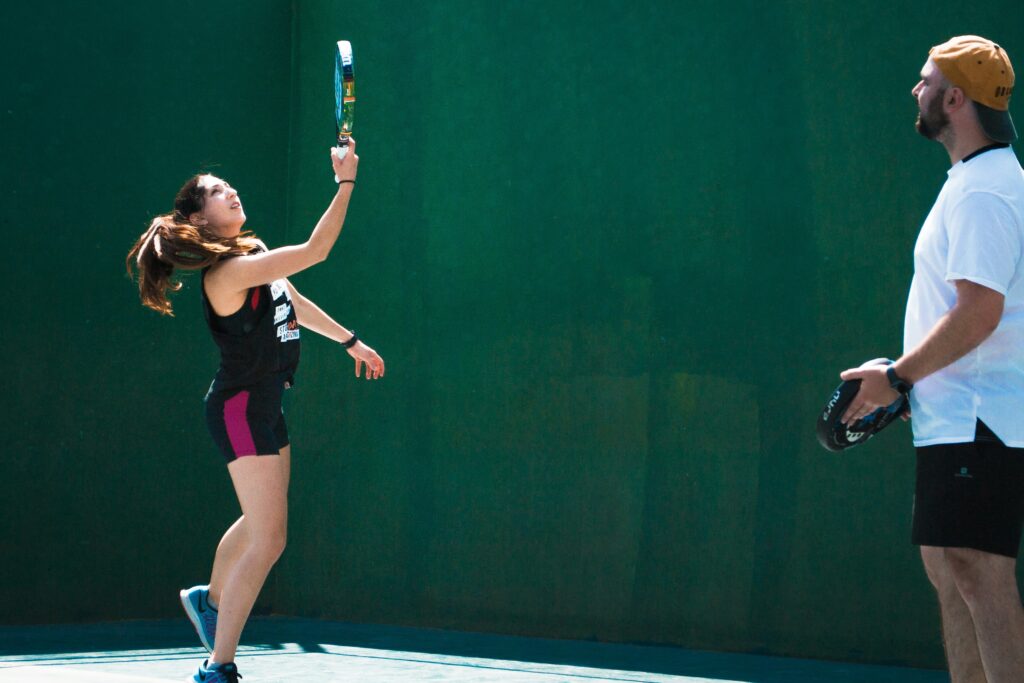
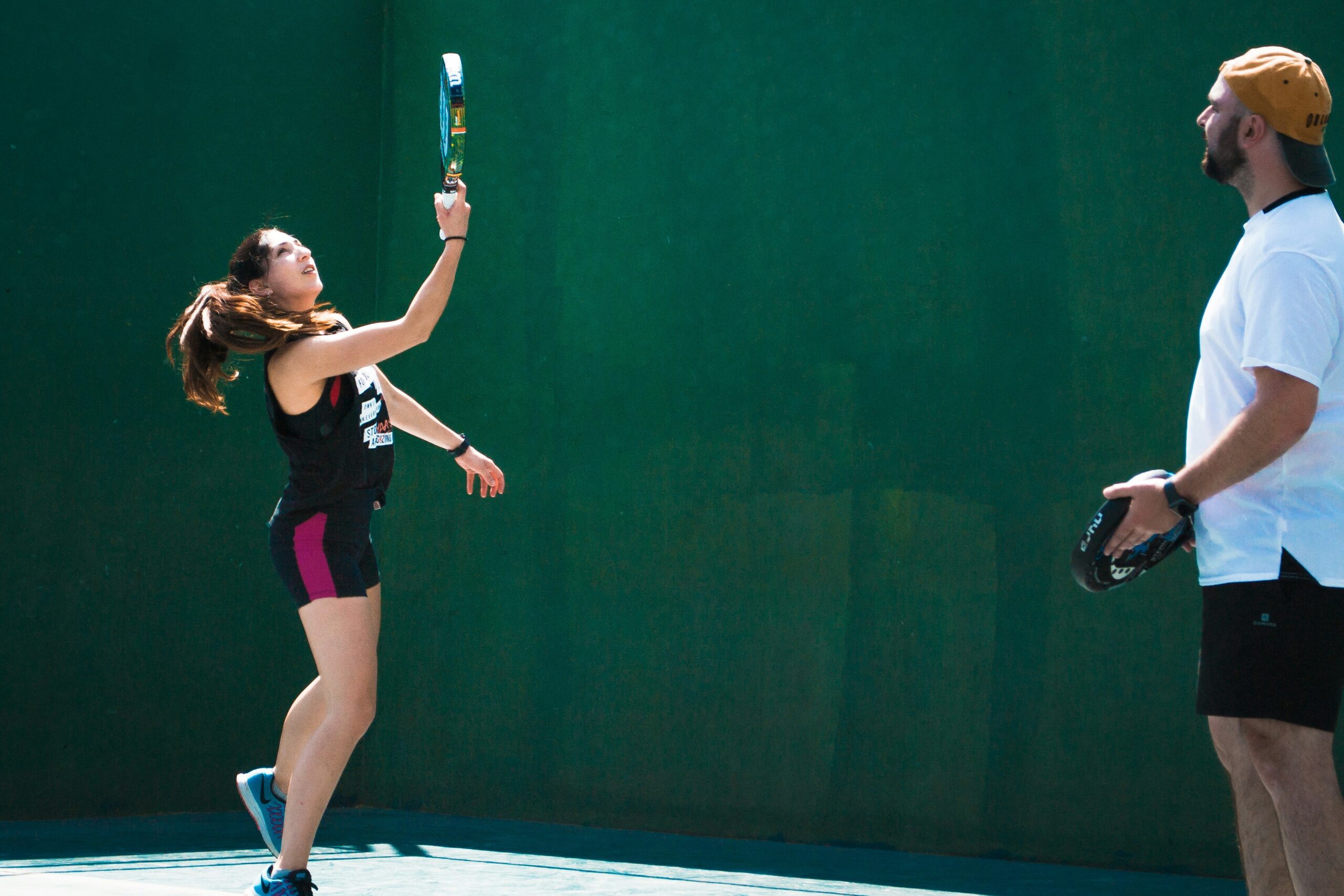
- Turn sideways immediately. As you read the lob, rotate so your shoulders point toward the side wall. Your non-hitting shoulder faces the net. This side-on position is non-negotiable — hitting square-on kills your control.
- Point and track the ball. Raise your non-hitting hand toward the ball to help judge the flight and keep your shoulders coiled.
- Get behind and under the ball. Using the footwork below, position so the ball will drop slightly in front of and to the side of your body — roughly at 1 o’clock for a right-hander — not directly overhead.
- Make contact in front, at head-to-shoulder height. The contact point is lower and further forward than a tennis smash. The racket face is slightly open.
- Slice down and through. Brush the outside/underside of the ball with a downward-forward “carrying a tray” motion. This slice is what slows the ball and makes it skid awkwardly off the glass.
- Follow through out to the side. Finish with the racket travelling toward your target and out to your hitting side (around hip height) — not across your body. A long, smooth follow-through is what gives depth.
- Recover to the net. Your weight should finish moving forward so you can immediately re-take your net position. That’s the whole point of the shot.
Footwork: the part everyone skips
A bandeja is won or lost before you even swing. Good footwork gets you behind the ball with balance.
- First step is a pivot on the lob read — turn side-on with your outside foot.
- Move back with crossover or shuffle steps, staying side-on. Never backpedal facing forward — you’ll lose balance and vision.
- Load the back foot as the ball arrives, then transfer weight from back foot to front foot through contact.
- Finish moving forward, recovering toward the net.
Because the bandeja involves quick backward and lateral movement, stable court shoes matter for both grip and injury prevention — see the best padel shoes. And a forgiving racket with a large sweet spot makes overheads far more consistent while you learn; our padel racket shapes explained guide covers which shapes help most, and best padel rackets for beginners has specific picks.
Where to aim your bandeja
Placement beats power every time:
- To the side glass, cross-court. The classic target: aim so the ball lands deep and dies into the side wall/corner. A well-placed bandeja that skids off the glass is almost impossible to attack.
- Deep down the middle. Reduces your opponents’ angles and creates confusion about who takes it.
- Avoid the centre-height, short bandeja. A shot that sits up in the middle of the court is an invitation for your opponents to counter-smash.
The goal is never to win the point with the bandeja itself — it’s to keep opponents pinned at the back while you hold the net and wait for a weaker ball to attack.
Common mistakes (and quick fixes)
- Hitting it flat and hard. That’s a bad smash, not a bandeja. Fix: commit to slice; think “control, not kill.”
- Contact point too far back / directly overhead. Robs you of control and depth. Fix: take the ball in front, at 1 o’clock.
- Staying square to the net. Fix: turn side-on the instant you read the lob.
- Dropping the elbow. Fix: lead with a high elbow, like reaching to serve a tray.
- Retreating after the shot. Fix: finish your weight forward and step back to the net — holding position is the entire purpose.
- No follow-through. Fix: extend toward the target; a stabbed swing lands short.
Three drills to groove your bandeja
- Shadow swings (no ball): 20 reps focusing on the turn, high elbow and slice finish. Build muscle memory before adding a ball.
- Feed-and-place: have a partner lob to you; aim 10 in a row into the side-glass corner. Track placement, not power.
- Bandeja-and-recover: hit a bandeja, then touch the net line before the next feed. Trains the habit of holding position.
Practise the bandeja every session — it’s the shot that separates players who hold the net from players who merely reach it. Want to see it done at the highest level? Watch how the pros use it on the Premier Padel tour, governed by the International Padel Federation (FIP). For UK coaching and where to play, the Lawn Tennis Association is the national body for padel.
Frequently asked questions
What is a bandeja in padel? The bandeja is a controlled, sliced overhead shot used to return a lob while keeping your position at the net. It prioritises placement and spin over power, and is one of the most important shots in padel because holding the net is how you control points.
Is the bandeja the same as a smash? No. A smash (remate) is a powerful, flat or topspin overhead meant to win the point outright. The bandeja is slower, sliced, and defensive — its job is to reset the rally and keep you at the net rather than end the point.
What grip should I use for a bandeja? The continental (hammer) grip. It lets you open the racket face and slice the ball cleanly, and it’s the standard all-purpose grip in padel.
Where should I aim the bandeja? Deep, cross-court, into the side glass so the ball dies in the corner. Down the middle is also effective for reducing your opponents’ angles. Avoid short, high balls in the centre of the court.
Why do I keep losing the net after a bandeja? Usually because your weight moves backward through the shot. Focus on transferring your weight forward and stepping back to the net immediately after contact — recovery is part of the shot.
Bandeja vs víbora — which should I learn first? Learn the bandeja first. It’s the foundational control overhead. Once it’s reliable, add the víbora as a more aggressive option.
Next in the series: master the aggressive overhead in our víbora technique guide, and make sure your gear is right with the best padel rackets for beginners.