 11
11
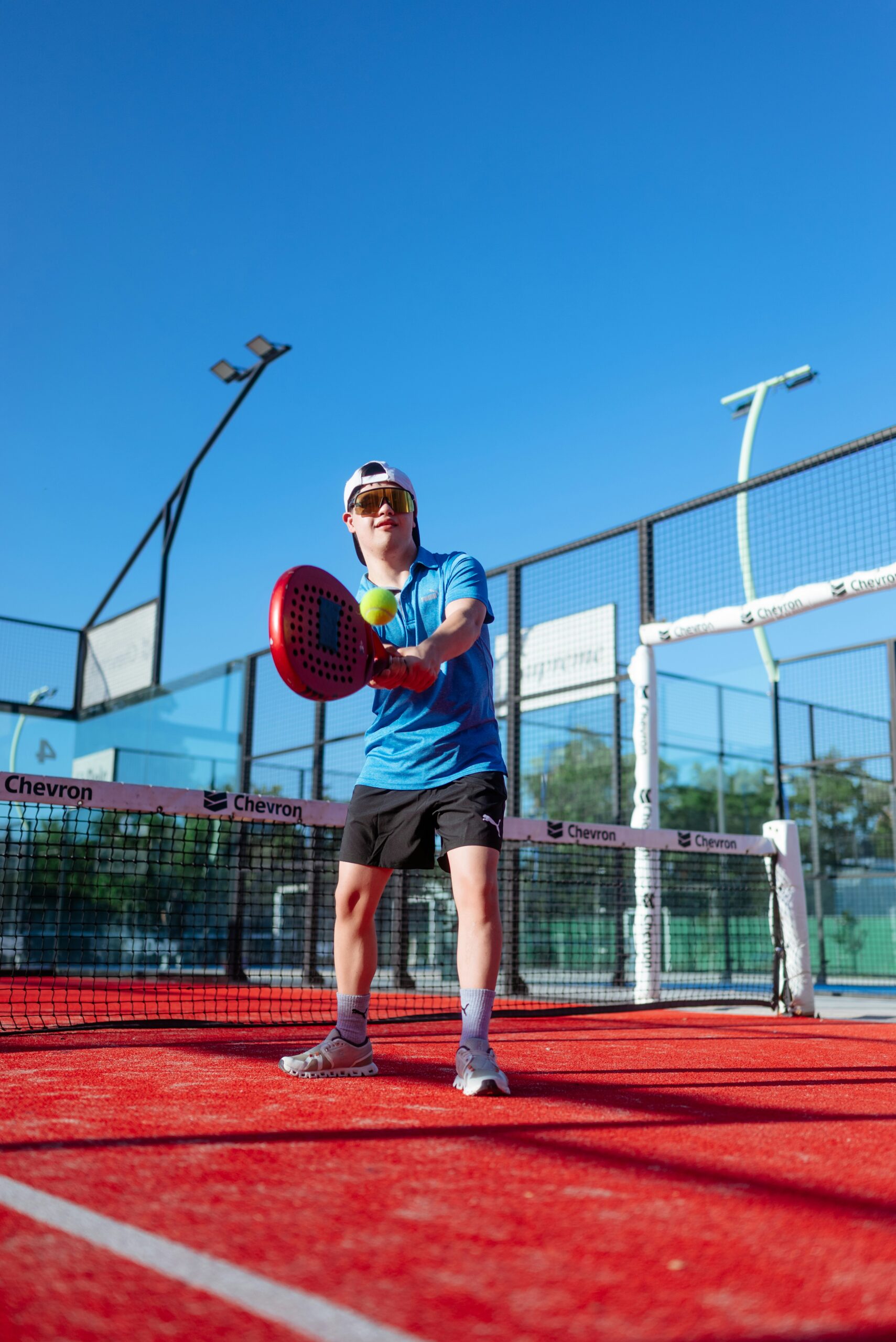
Padel has a reputation for being easy to pick up, and honestly, that reputation is earned. Most people can get a rally going within their first session, feel the ball coming off the wall for the first time, and walk off the court thinking — okay, I get it, I like this. That part is true.
What nobody tells you is that there’s a massive gap between “getting the ball back” and actually improving. I watched it happen to myself, and I’ve watched it happen to pretty much everyone who shows up at a padel club for the first time with no guidance. You play the same way for weeks, make the same mistakes, wonder why your game feels stuck, and eventually assume you’ve just hit some kind of natural ceiling.
You haven’t. You’re just doing a few specific things wrong that are easy to fix if someone points them out early enough. These five things come from watching hundreds of beginners go through their first months on the court — the ones who addressed them got dramatically better, faster. The ones who didn’t just kept showing up and grinding the same patterns into muscle memory.
→ Brand new to the sport? Start with our guide: Padel for Absolute Beginners: Simple Rules, Easy Start & Why You’ll Love It
If you take exactly one technical thing away from this article, make it this. The continental grip is not a minor detail. It is the foundation that every single shot in padel is built on, and getting it wrong from the start is like building a house on sand. You can put in the work for months and still feel like something is subtly off, and it will be this.
The continental grip means holding the racket as if you’re shaking hands with the edge of the frame — your base knuckle sitting on the top bevel of the handle. Pick a racket up off the ground and you’re roughly there. It feels a little weak at first, especially on forehands. Your wrist will complain. The ball will go weird places. Push through that phase, because here’s the thing that makes padel different from tennis: you use the same grip for everything. Forehand, backhand, volley, serve, overhead — all of it. No switching, no adjusting mid-rally. Once the continental is in your hands, it stays there.
If you’re coming from tennis, this is genuinely the hardest part of learning padel, and I say that with sympathy because I went through it. Your western forehand grip feels powerful and familiar and your hand will keep drifting back to it without you noticing. Force yourself to check before every single point until the continental becomes automatic. Two weeks of conscious effort saves you six months of confusion later.
If you’ve never played a racket sport before? Honestly, no cap — you have an advantage here. Nothing to unlearn. Just start right and stay there.
Every beginner goes through the same phase, and I remember mine vividly. A deep ball sails toward the back glass, every instinct fires at once, and you lunge forward trying to catch it before it gets past you. You reach, you mishit, you lose your balance, the ball dribbles into the net, and you feel embarrassed for reasons you can’t entirely explain.
What you didn’t realize is that if you’d just let it go, the ball would have bounced off the glass and come back to you in a totally comfortable position to play a clean shot from. The wall was trying to help you. You panicked and rejected the help.
Learning to trust the wall is the single biggest mental shift in padel, and nothing else really opens up until you’ve made it. No other racket sport gives you this second chance. In tennis, if the ball gets behind you, it’s over. In padel, the rally is just getting started.
The fastest way to build wall confidence is so simple it almost feels too easy: find an empty court, stand near the back glass, and just watch. Don’t hit anything. Have someone feed balls into the wall at different speeds and angles, or toss them yourself, and observe what happens. After thirty or forty bounces, the patterns become obvious — hard shots come back fast and far, soft shots cling to the glass and barely return. Once you see it, you stop fearing it.
One focused session of this and most beginners go from dreading the back wall to actively choosing to let balls go. That shift happens overnight and it changes your entire defensive game.
This one sounds simple, but most beginners never actually do it, and it costs them more points than any technical mistake.
Padel is a territorial game. The team controlling the net controls the point — this is the most fundamental strategic truth of the sport and it stays true from beginner level all the way to professional. The pattern that wins points at every level is the same: hit a deep ball that pushes your opponents back, then immediately move forward toward the net. From there, you can volley their scrambled returns, hit angles they can’t reach, and apply the kind of pressure that forces errors.
What beginners actually do: hit a great deep shot, stop, watch it, and admire it. They stay planted in the back court while their opponents somehow get the ball back, and the chance to take the net evaporates. I did this constantly in my first few months and it was maddening to watch on video afterward.
Make it automatic. Every time you hit a ball that pushes opponents into a defensive position, take two or three steps forward. Not always a full sprint to the net — sometimes just a few steps improves your position for the next ball. Over time it becomes instinctive, and your court sense improves in a way that feels almost mysterious until you understand what’s causing it.
The flip side matters equally: when opponents lob over your head, retreat all the way to the back wall without hesitation. The worst place to be in padel is the middle of the court, caught between net and glass, belonging to neither world. Commit to one or the other. Middle of the court is where points go to die.
This one goes against every competitive bone in your body, and I’m asking you to try it anyway for three full sessions before you judge it.
Padel is not a power sport. The court is enclosed. Balls can’t fly out of bounds the way they can in tennis, and the walls give your opponents a chance to retrieve almost anything you hit hard enough to feel satisfying. When you swing at full power, two things happen: your accuracy drops because fast swings amplify every tiny technical error, and even the ones that go in often come back because of the glass.
Watch professional padel. Like, actually watch it — the best players in the world hit the ball with surprisingly moderate pace most of the time. They win points through placement, timing, and tactical intelligence. The occasional smash happens, but it’s a finishing shot deployed in specific situations, not a default setting.
For your next three sessions, deliberately play at about 70% of your max. Focus on hitting the center of the racket and placing the ball in a specific zone. Count your consecutive shots in play. You will almost certainly be shocked at how many more points you win with controlled, well-placed shots than with full-power attempts that feel great on contact and go nowhere useful.
A trainer I played with in Venice Beach once said it like this: “Lowkey, the softer you hit in padel, the more hella confusing it is for the other team.” She was right, and I didn’t believe her until I tried it.
→ Ready to learn the key overhead shot for net play? Read Padel Mastery: How to Conquer the “Bandeja” and Shine on the Court
Padel is always doubles. Always. And yet most beginner pairs play like two strangers who happened to end up on the same side of the net — no communication, no coordination, no shared awareness of what’s happening. It costs them points constantly, and they usually blame their technique when the real problem is the silence.
Three specific things go wrong when partners don’t talk. Both players go for the same ball, or neither player goes for it, and it drops in the middle while they stare at each other. One player drifts forward while the other stays back, creating a diagonal gap that any halfway decent opponent will find within two points. And tactical opportunities disappear — your partner hits a beautiful lob that pushes both opponents to the back wall, the perfect moment to rush the net together, but without a verbal cue only one person moves.
The fix is almost embarrassingly simple. Three phrases cover most of what you need: “Mine” when you’re taking the ball, “Yours” when your partner should take it, and “Up” when it’s time to move forward together. That’s it. Start there.
It feels excessive and awkward for about two sessions. Then it becomes totally natural. Then you play a session without it and you feel completely lost, like trying to drive without mirrors. And your results will show it — coordinated pairs beat uncoordinated pairs of equal skill level almost every single time, no cap.
Between points matters too. Thirty seconds of quick feedback — “that lob is working, let’s keep using it” or “they keep targeting my backhand, I’ll shift left” — compounds into a real tactical advantage over the course of a match. It’s the part of padel that feels the most like a team sport, and once you find a partner you communicate well with, it’s genuinely one of the best feelings in any sport I’ve played.
None of these five things will make you a tournament player overnight. That’s not the promise here. But what they will do is separate you from the large majority of recreational beginners who never address these basics and just keep grinding the same mistakes into their muscle memory for years.
Most players who actually follow through on these report a noticeable jump in their game within two to four weeks. Not because it’s magic — because you’re eliminating the most common errors and replacing them with habits that genuinely work.
The beautiful thing about padel is that the learning curve stays rewarding for a long time. Once these five foundations are solid, an entirely new world opens up — the bandeja, the vibora, the chiquita, advanced wall play, tactical formations. All of that is out there waiting, and all of it builds on exactly these five things.
Get them right first. Everything else follows. And if you’re in California and you haven’t found a padel club yet — bestie, the courts are right there, the vibe is immaculate, and you are genuinely missing out.
→ Choosing the right racket helps with control too. See How to Choose the Perfect Racket for Your Playing Style
→ Understanding the full picture of padel helps communication too. Read our Padel 2026: The Complete Guide from Choosing Your Racket to Mastering the Court
→ Want to know what gear to add to your bag? Check out Padel Accessories You Didn’t Know You Needed
Most beginners feel competent after 10–15 sessions. Playing 2–3 times per week, you can reach a solid recreational level within 3–6 months.
Yes — even 2–3 group lessons significantly accelerates progress by correcting grip and positioning early, before bad habits form.
Court positioning. Knowing when to be at the net versus the back wall determines the outcome of most rallies at recreational level.
Generally yes. The smaller court, enclosed walls, and underarm serve make padel more accessible to beginners, with a shorter learning curve to enjoyable play.