 11
11
If you’re new to padel, the rules can look more complicated than they really are. There is a net, glass walls, a metal fence, an underarm serve and a scoring system that looks familiar if you’ve played tennis.
The good news is that you can understand the padel tennis rules in just a few minutes.
This guide explains padel rules, serving, scoring, walls, faults and the most common situations beginners encounter on court.
Quick answer: Padel is normally played as doubles on a 20 × 10 metre enclosed court. The serve is underarm, the ball must bounce in the opponent’s service box, and the walls become part of the game after the ball has bounced. Scoring is traditionally based on tennis, although the current FIP rules also provide alternative scoring formats for certain competitions.
Padel is a racket sport that combines elements of tennis and squash.
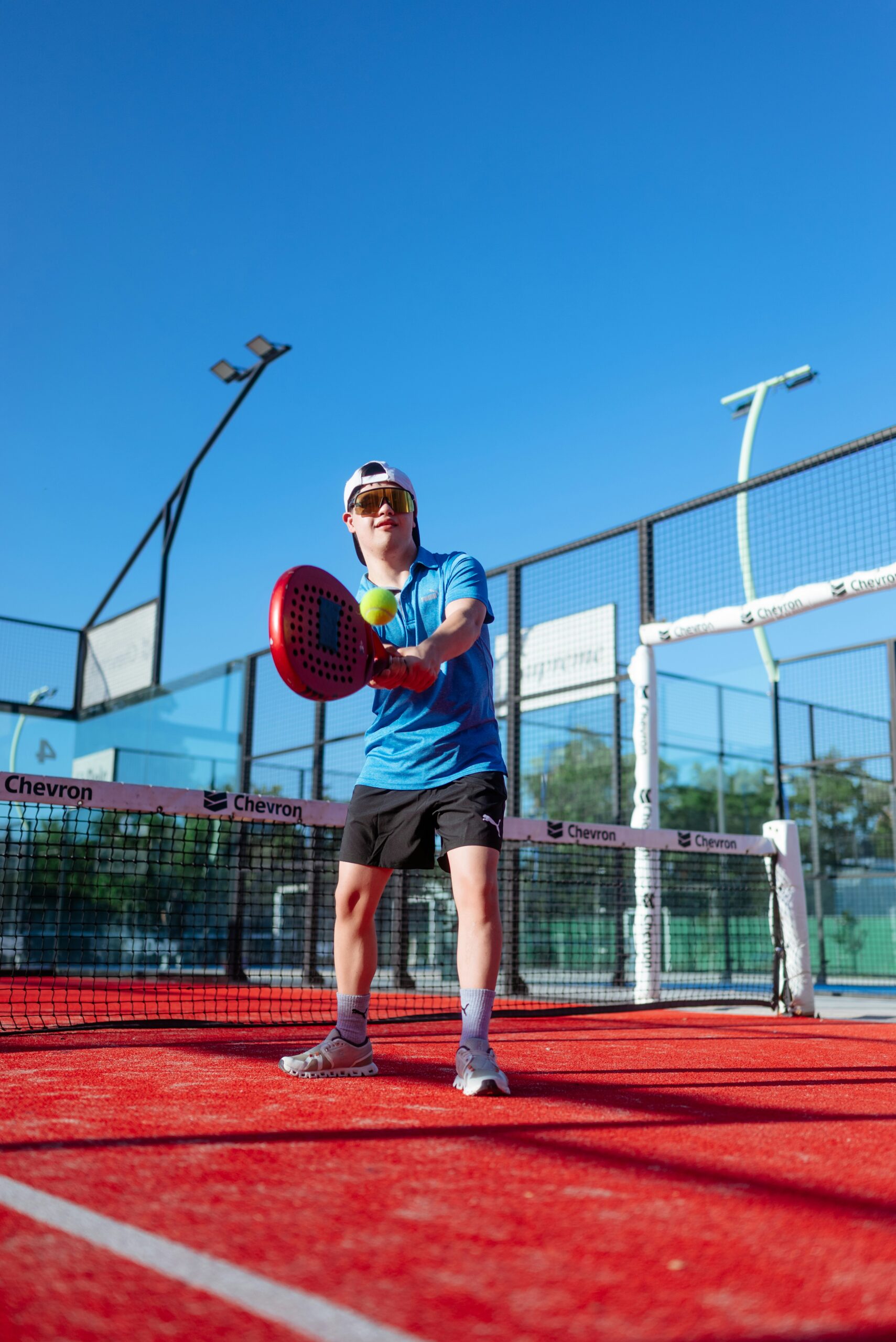
A standard padel court measures 20 metres long and 10 metres wide and is enclosed by glass and metal mesh. Most recreational games are played by four people, with two players on each team.
The objective is simple:
Win the point by making your opponents unable to return the ball legally.
The unusual part is that the walls are part of the game.
Unlike tennis, you do not automatically lose the point when the ball hits the glass behind you. If the ball has bounced on your side of the court first, you can often use the wall to return it.
That single difference explains why understanding the rules for padel is so important for tennis players discovering the sport.
Before getting into the details, here are the basic rules you need to know:
| Rule | What it means |
|---|---|
| Players | Usually 2 vs 2 |
| Court | 20 × 10 metres |
| Serve | Underarm |
| Serve direction | Diagonal |
| Serve bounce | The ball must bounce before being struck |
| Scoring | Traditionally similar to tennis |
| Walls | In play after the ball bounces |
| Second bounce | You must return the ball before it bounces twice |
| Match format | Usually best of three sets in traditional scoring formats |
| Racket | Solid padel racket with no strings |
The International Padel Federation (FIP) is the sport’s international governing body and publishes the official Rules of Padel.
One of the easiest parts of padel for tennis players is the scoring system.
Traditionally, points are counted:
0 → 15 → 30 → 40 → Game
For example:
If both teams reach 40, the score is deuce.
Under the traditional advantage system, a team must win two consecutive points from deuce to win the game.
A team normally needs to win six games with a two-game advantage.
For example:
A traditional tiebreak is then used to decide the set.
There is an important 2026 update.
The FIP rules now include the Star Point system as an alternative scoring format. FIP announced that the new system would be implemented in Premier Padel from the 2026 season.
This means you should not assume that every professional competition necessarily uses exactly the same deuce format as a recreational club match.
For casual games, however, it is best to agree on the scoring system before you start.
The serve is one of the biggest differences between tennis and padel.
The padel serve is underarm.
Before serving, the player must bounce the ball and then hit it. The serve is made diagonally into the opponent’s service box.
The server changes sides after each point.
The server stands behind the service line.
The ball is bounced on the server’s side before it is struck.
The serve must travel diagonally across the net and land inside the appropriate service box.
The server gets two attempts, just as in traditional tennis scoring.
No.
A normal padel serve is not an overhand tennis serve.
The ball is struck at or below the permitted height specified by the rules, which is why padel serves generally look much lower and slower than tennis serves.
And that is intentional.
The serve is not supposed to be the dominant weapon it can be in tennis.
Once the serve has been returned, the rally begins.
This is where padel becomes very different from tennis.
During a rally, the ball can bounce and then hit the glass or other permitted court structures.
For example:
Ball → floor → glass → player returns
That is legal.
But:
Ball → glass → floor
without first bouncing on the opponent’s court is not the same situation.
The key principle for beginners is:
The ball generally needs to bounce on the opponent’s court before it can use the wall as part of a legal rally.
This is one of the most important padel tennis rules to learn.
The walls are what make padel unique.
Imagine your opponent hits the ball toward the back of your court.
You do not necessarily have to hit it before it reaches the glass.
Instead, you can allow it to bounce:
floor → back glass
and then play the ball after it rebounds from the wall.
This gives you more time and creates completely different tactics from tennis.
Yes.
If the ball has already bounced on your court, it can rebound from the glass and remain playable.
You can also use your own walls strategically.
For example, an opponent may hit a difficult ball deep into your court. Rather than rushing toward it, you can allow it to hit the back glass and then play the rebound.
Learning to judge these rebounds is one of the biggest steps in becoming comfortable with padel.
This is where things become more complicated.
Padel courts contain both glass and metal mesh.
They do not always behave identically under the rules.
A ball that hits the floor and then the glass can normally continue in play.
A ball that hits the mesh can also be playable in appropriate rally situations.
However, the fence has particular consequences during the serve.
This is one of the reasons beginners should not simply assume that “anything that hits the wall is okay.”
The exact result depends on what the ball hit, when it hit it and whether it had already bounced.
You lose the point when you fail to return the ball according to the rules.
Common examples include:
If the ball bounces twice on your side before you return it, your opponents win the point.
If your shot does not cross the net, the rally ends.
If your shot hits the opponent’s wall before bouncing on their court, it is generally out.
This is an important difference between a legal wall rebound and simply hitting the wall.
Certain courts allow players to leave the court and return the ball from outside.
However, this is subject to specific court and competition conditions.
It is not something beginners should assume is automatically legal everywhere.
Touching the net or certain parts of the court structure during a live point can result in losing the point.
Yes.
This is one of the most useful things to understand when learning padel rules explained.
Suppose your opponent hits the ball deep.
It bounces once on your side and then hits the back glass.
You can wait for the rebound and hit it back.
You can even deliberately use your own glass to create more time.
This is why experienced padel players often position themselves differently from tennis players.
Instead of always trying to reach the ball before the bounce, you learn to read the rebound.
Yes.
You can volley the ball before it bounces on your side.
This is particularly important near the net.
A volley allows you to attack quickly and prevent your opponents from controlling the point.
However, you cannot simply volley an opponent’s serve before it has bounced in the service box.
The serve must first land in the correct service area.
The lob is one of the most important shots in padel.
Instead of trying to hit the ball hard past your opponent, you send it high over their head.
A good lob can push opponents away from the net and give your team time to move forward.
This is particularly effective because padel is played on a relatively compact court.
A controlled lob is often more useful than a powerful shot.
For beginners, this is one of the first tactical lessons worth learning:
Do not try to win every point with power.
Padel is a doubles game, so positioning matters enormously.
A common basic formation is:
Both players at the net
or
Both players near the back of the court
What you generally want to avoid is having one player close to the net while their partner stays far behind without a tactical reason.
The team should move together.
When one player moves forward, the partner normally follows.
When one player moves back, the partner should adjust as well.
This creates a connected defensive and attacking position.
If you already play tennis, padel will feel familiar for about five minutes.
Then the walls appear.
| Tennis | Padel |
|---|---|
| Usually played singles or doubles | Mainly played doubles |
| Larger court | 20 × 10 m court |
| Overhand serve | Underarm serve |
| Walls normally out | Walls are part of the game |
| Stringed racket | Solid padel racket |
| Powerful serve can dominate | Serve is mainly used to start the point |
| Large court coverage | Positioning and teamwork are critical |
The scoring is one of the most familiar elements because padel traditionally uses tennis-style scoring.
This is a common source of confusion.
You may see people searching for “paddle rules” when they actually mean padel.
But padel and pickleball are different sports.
Padel is played on an enclosed court with glass and mesh walls, while pickleball is played on a different court with different equipment, rules and scoring.
The word “paddle” is also sometimes used informally when people are talking about a padel racket.
So if you searched for:
paddle rules
but you are looking for the rules of padel, make sure you are reading a padel-specific guide.
If you’re looking for pickleball rules, you need a different rulebook.
Here are the mistakes you will see most often when new players start playing.
Don’t.
The standard padel serve is underarm.
They aren’t.
The walls are an essential part of padel.
The ball generally needs to bounce on the opponent’s court first before using their wall as part of a legal rally.
If you allow the ball to bounce twice, you lose the point.
Sometimes the best shot is to let the ball reach the wall and play the rebound.
Padel is heavily based on teamwork and positioning.
The net position is powerful, but you still need enough time to react to lobs and passing shots.
Good padel teams move as a unit.
Control and placement often beat power.
Traditional scoring remains common, but official competitions can use different formats under current FIP rules.
Imagine this rally:
Player A serves diagonally.
The ball lands in the correct service box.
Player B returns it.
The ball bounces on Player A’s side and then hits the glass.
Player A waits for the rebound and returns it.
Player B plays a volley.
Player A hits a lob.
Player B moves backward and allows the ball to bounce before playing it.
The rally continues.
Eventually, Player B fails to return the ball before the second bounce.
Point to Player A’s team.
That is the basic logic of padel.
Once you understand the relationship between bounce + wall + return, most of the game starts to make sense.
You do not need much equipment to start playing padel.
You need:
A padel racket is different from a tennis racket.
It has a solid hitting surface with holes rather than strings.
For beginners, a round-shaped racket with a relatively forgiving sweet spot is often easier to control than an aggressive diamond-shaped racket.
If you’re choosing your first racket, our beginner’s racket guides can help you compare shapes, weight, balance and materials.
Most padel matches are doubles, with two players on each team.
Yes. The serve is made after bouncing the ball and is hit underarm within the permitted height.
Yes. During a rally, the ball can rebound from the glass or mesh after it has bounced on the court.
Yes. If the ball has bounced on your court first, you can play the rebound from the wall.
A ball that hits the opponent’s wall before touching their floor is generally not a legal rally shot. The ball must first bounce on the opponent’s court for the wall to become part of the rally.
Traditionally, yes: 15, 30, 40 and game. However, current FIP rules also include alternative scoring formats, including the Star Point system used in certain professional competitions.
No. They are different racket sports with different courts, equipment and rules.
It depends on the players, scoring format and match format. A recreational match commonly takes around 60–90 minutes, although competitive matches can be considerably longer or shorter.
If you’re stepping onto a padel court for the first time, don’t try to memorise the entire rulebook.
Remember these five things:
1. Serve underarm.
2. Serve diagonally.
3. Let the ball bounce before using the wall as part of the rally.
4. Return the ball before it bounces twice.
5. Move with your partner.
Once these rules become automatic, you can start focusing on what makes padel really interesting: positioning, lobs, volleys, wall rebounds and creating space.
And that’s when padel stops feeling like a strange version of tennis and starts feeling like its own sport.
The basic padel tennis rules are surprisingly easy to learn.
The scoring will feel familiar to tennis players, but the walls completely change how points are constructed. Instead of simply hitting the ball back as quickly as possible, you need to think about angles, rebounds, position and your partner.
If you’re completely new to the sport, learn the serve first, then practise reading the back-glass rebound. Once those two things feel natural, the rest of the game becomes much easier.
For the most authoritative version of the rules, check the current Rules of Padel published by the International Padel Federation (FIP), because competition rules and scoring formats can change over time.